Quick housekeeping note: I advertise this as an 8:00am Saturday broadcast, but I recently learned some of you are reading from as far away as Australia. Starting last week, I switched on a Kit feature that sends this at 8:00am in your own time zone, wherever you are. Hope that lands better for everyone.
Let's jump in.
This week's issue is all about instructional coaching:
Leveraging teams in your school or district (resource included)
A real-world case study on instructional coaching, plus a communication template that worked
Research turned into practice you can use tomorrow
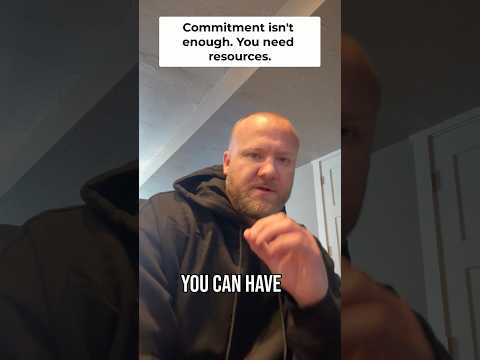
A short video that pushes compliance versus commitment one step further, into time, people, and money
If something resonated, just reply and let's unpack it together.
Growing the Community
556 public education leaders making a difference and counting
The goal is 1,000. If this is useful, share it with another K-12 leader, or with anyone who supports the work of school and district leaders.
Progress
56%
556 of 1,000 subscribers
Share The Work
Know a leader who'd value this?
Forward it to a principal, assistant principal, or district leader. Send it to an aspiring administrator or higher ed faculty member. Share it with anyone who coaches or supports K-12 school leaders. One forward can change how someone leads this week.
Leveraging teams in your school or district:
The power of the instructional coach team
I had the pleasure of hiring the first ever instructional coach team at this high school, and it might have been the most critical (and most expensive) investment for the school.
Instructional coaches are the highest leverage investment a school can make. They are also the most expensive. A full-time coach runs $70,000 to $90,000 a year in salary and benefits in a low-cost state, and well over $100,000 in many others. That is real money, money that could staff two paraprofessionals or fund a building-wide technology refresh. But the return works differently. One strong coach can change every teacher and, through them, every classroom, through better instruction. The math only holds if coaching actually happens: real cycles of observation, feedback, and follow up. Not paperwork. Not compliance walkthroughs disguised as support.
Time, people, money: coaches sit at the center of all three. Here are some tips, plus a template for structuring your instructional coach team's weekly meeting:
Run actual cycles, not drop-ins (this takes a great principal to build the culture and expectation first)
Pick one thing at a time
Anchor in student work, not teacher performance
Protect the coach's calendar (the principal is the gatekeeper)
Build collective efficacy, not just individual growth
This team ran almost 40 full, formal coaching cycles in a single year, in a school that jumped 84 spots in the state rankings that same year. Here is a template inspired by their agenda: Instructional Coach Team Meeting Agenda Template.pdf.
A case study on instructional coaching, plus a communication template tested in the real world:
An exit ticket note from a faculty meeting
The power of distributive leadership
If teachers only get empty promises instead of real power and authority, instructional coaching and continuous improvement will never take root.
I once worked in a school with only two teacher leadership structures: department heads, and one other team that absorbed everything department heads couldn't handle. Those teacher leaders got $200 or $500 stipends, no resources behind them, no meeting agendas, no shared commitment, no ownership over anything. The principal opened every meeting with the same rhetorical question: what do we need to do to improve the school? You could feel the faculty languishing. Achievement was stagnant, momentum was rock bottom, and the school carried a federal accountability designation for students with disabilities (SWD).
Your school needs several teacher leadership structures, strategically built and owned by teachers, not administrators. Only then can the culture make room for what an instructional coaching program is actually supposed to do. Here are a few resources to get your school's culture ready for instructional coaching:
An email template built from an email I personally sent to the coaches in that same school that resulted in 100% enrollment in and completion of coaching cycles the same year: Coaching Cycle Email Template.pdf.
Here are some tips for you to try out next week on this topic:
Fund teacher leadership like you fund coaching. A stipend with no budget line behind it is a title, not a structure.
Give every team a real decision to own, not just a discussion to have.
Replace the open-ended "what should we do" opener with one specific problem the team is accountable for solving.
Audit your current leadership structures. If there is no agenda and no resources behind it, it does not count.
School and district leaders can spend money on collective efficacy on purpose. It doesn't have to stay an abstract, subjective feeling. In 2026, our leaders have to back that intention with real resources and strategic action.
Research turned into practice:
Compliance versus commitment:
Senge argues true commitment comes from uncovering a shared vision, not mandating one. Dictating a vision is counterproductive, no matter how good the vision is.
We're back in The Fifth Discipline this week for a look at the difference between compliance and commitment. Every story above is really about that same line. A coaching cycle can be a genuine partnership or a compliance walkthrough wearing a nicer name. A teacher leadership team can be an owned structure or a stipend with no agenda attached. Compliance gets you attendance. Commitment gets you results.
Tips:
Teach compliance versus commitment to your building leaders, and ask them to constantly reflect on which one they're nurturing.
Build tools and indicators that measure commitment, not compliance (opt-ins, self-referrals, and the like).
Understand the value of both compliance and commitment.
Find where the commitment already exists, and resource it with discretionary or otherwise appropriate resource allocation.
But commitment by itself is not enough either. I put together a short video this week that pushes the idea one step further: commitment only turns into results when you put real time, people, and money behind it. A team can be fully committed to a vision and still fail if the calendar, the staffing, and the budget don't match what they say they believe.
If this framework is showing up in your building this week, in coaching, in teacher leadership, or somewhere else entirely, hit reply and tell me where.
That's the shape of this issue: an investment worth defending, a leadership structure worth funding, and a framework worth pushing past compliance and into commitment. I appreciate you spending part of your Saturday here every week. If any of this would help a colleague, an aspiring administrator, or another school leader you know, forward it their way. That's the best way this list grows.
Thanks,
Ryan
You're Invited
The parts that don't fit in an email
Some of this only makes sense with more room to show the work. That's what the channel is for, same lens on time, people, and money, just deeper.